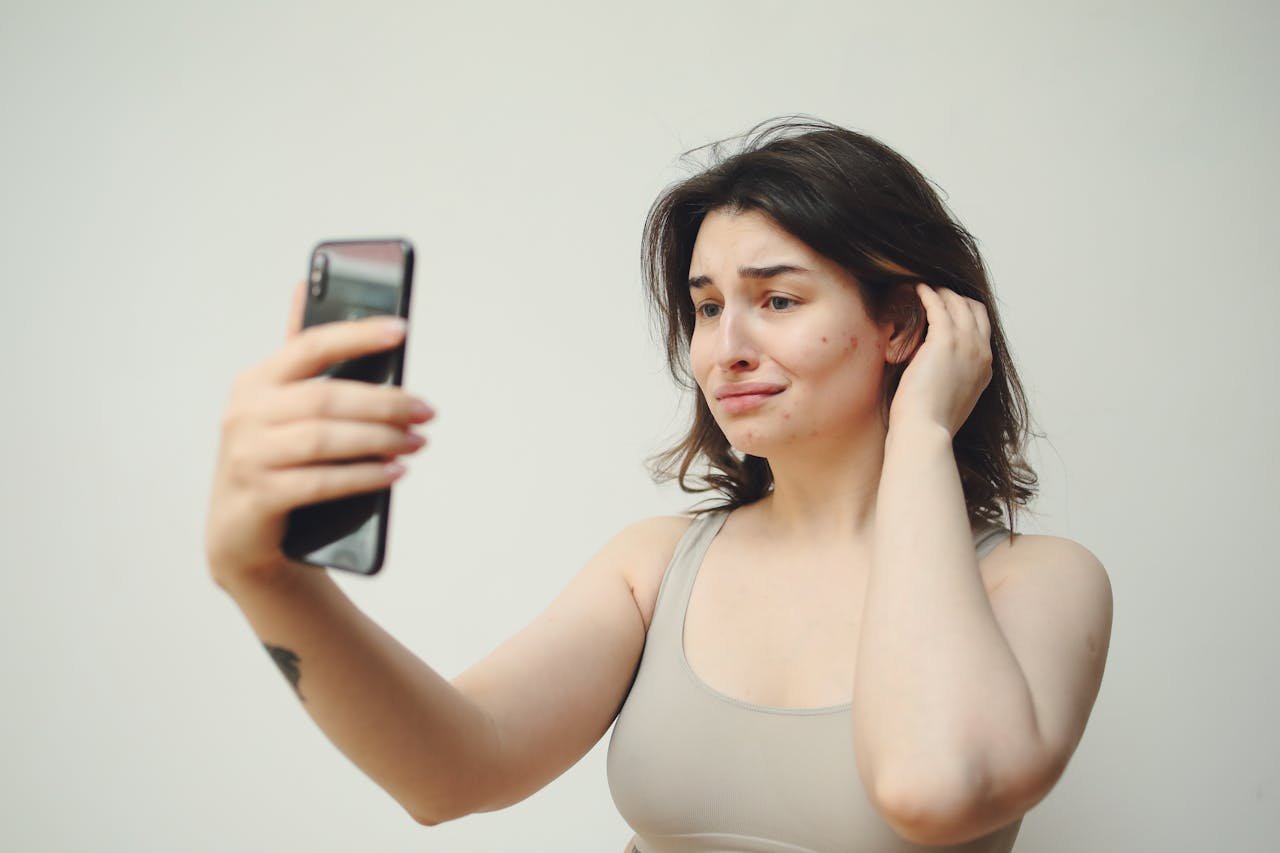
When we go through periods of emotional turmoil, like breakups, deadlines, family stress, or burnout, we may notice a nasty breakout on the horizon.
Well-known to be deeply connected to the nervous system, your skin responds to stress, often before the breakout even appears.
This is the mind-skin connection, it’s here and has more influence on hormonal acne than we previously knew.
In this post, we will have a look at the emotional triggers that can trigger acne, what is happening biologically, and how bolstering our nervous system can be an efficient way to assist in the healing process.
How Emotional Stress Affects Your Skin (The Science)

Sending out cortisol, your body’s go-to stress hormone, when your brain picks up on emotional or physical stress it triggers the hypothalamic-pituitary-adrenal (HPA) axis.
Well-known effects of high cortisol levels include:
inflammation, an imbalance of blood sugar, overproduction of sebum, and a disturbance in the balance of estrogen and progesterone. Slow healing of the skin is another.
Coming straight from the brain, emotional stress hits the very same hormonal and inflammatory systems that contribute to acne. This is why no matter how well you’re eating, or what skincare routine you’re following, you may still get breakouts, especially in stressful times.
One of the most overlooked aspects of holistic acne healing is emotional stress and hormonal acne, especially how the nervous system influences inflammation and skin health.
Acne as a Stress Signal, Not a Failure
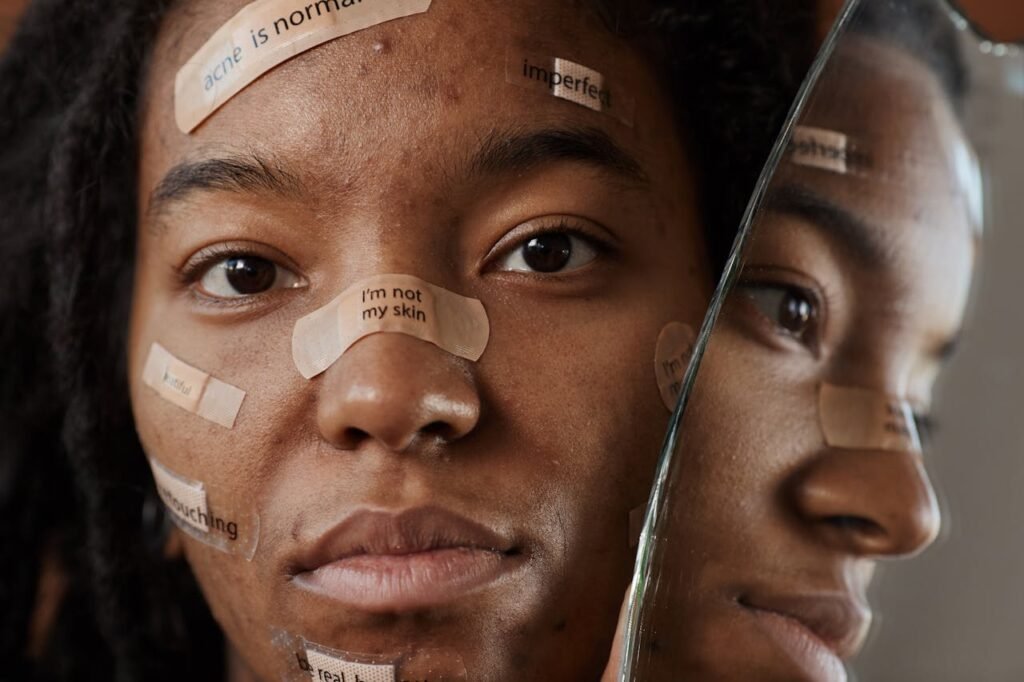
One of the most damaging things we can tell ourselves is that the breakouts are our fault, when we look at acne.
Well-known holistic practitioners say that acne is essentially a stress response, and that when our body perceives stress, it prioritises its survival over the repair of our skin.
Now, this doesn’t mean that the stress is “all in our head”, rather, it’s the body’s intelligent response to its surroundings.
For many adults, breakouts are closely tied to emotional load, which I explore more deeply in my post on emotional stress and acne and how the mind–skin connection shows up.
Emotional Stress vs. Physical Stress

Not all of it is the same, coming from a nervous system perspective, when we look at stress. There are many types of stress, including people-pleasing, overthinking, suppressed emotions, perfectionism, feeling unsafe, and chronic self-criticism, and all of them can wreak havoc on the nervous system.
The body can’t tell the difference between a looming deadline and unresolved emotional tension.
They both send the same messages to the nervous system and activate the same stress pathways. Over time, the constant and continuous activation of these pathways can manifest as hormonal acne, primarily on the jawline, chin and cheeks.
The Gut–Brain–Skin Axis

When we feel emotional stress, it’s not just our minds that are affected, our gut is too, and this is because stress has a ripple effect on digestion, the absorption of nutrients, gut inflammation and the delicate balance of the microbiome.
Coming rushing back to the surface, stress can calm down stomach acid and gut function, play with the balance of gut bacteria, cause the lining of the gut to become more permeable, and kickstart inflammatory reactions, all of which can mean that acne can flare up and gut problems occur at the same time.
Well-known as a vicious cycle, holistic acne treatments are only effective when we take into account the entire system, and not just one single symptom.
Why Hormonal Acne Often Worsens During Burnout

Our nervous system is out of balance, when we’re burned out.
One of the signs is when our cortisol levels get all over the place, sometimes spiking, sometimes crashing. This can throw off our blood sugar levels, thyroid function, sex hormone balance and makes our skin more sensitive.
Well-known signs of burnout are acne, and it’s not because you need to try even harder, but because you require more support.
Supporting the Mind–Skin Connection Holistically

For healing stress-related hormonal acne, completely eliminating stress isn’t a practical solution. What you can do, however, is to build up your body’s ability to withstand stress.
Coming into a routine and creating a soothing, predictable environment can send the message to your body that you’re safe. Regular, nutritious meals, sleep rhythms and gentle movements all serve to calm down the baseline stress and need no drastic changes.
Ignoring your emotions on the other hand is far more destructive. The body grows physiological stress through this. Journaling, therapy, breathing exercises, and even naming what you feel can cut through the tension you’re carrying.
Rest is a healing tool and is not as wasteful as many think it is. Deep relaxation and sleep support hormone signals, immune function and repairing skin. Without adequate rest no supplement could do its thing.
Stress can be thrown out of balance through too restrictive diets, in cases of stress-related acne. Well-balanced meals filled with protein, unprocessed carbs and fats can stabilize blood sugar and cortisol levels.
Why Stress-Related Acne Is Highly Individual

One of them may have a completely different skin reaction, when two people face the same stress.
Well-known contributors to how we respond to stress include past trauma, our lifestyle, the levels of nutrients in our bodies, the health of our gut, and the resilience of our hormones, and generic stress advice won’t cut it for all of us, coming from nowhere.
And your acne can be seen as a unique marker, it’s holding lots of personalized information.
Find Your Unique Acne Root Cause
Emotional stress is often a piece of the puzzle but not the whole picture, when dealing with acne. The Clear From Within Quiz can help you to figure out what else is going on in your body, and what systems are driving your hormonal acne.
👉 Take the Clear From Within Quiz
Emotional stress and acne are not separate.
When you learn to listen to your skin with curiosity instead of frustration, healing becomes less about control—and more about care.
Your skin isn’t asking you to be perfect.
It’s asking you to slow down, tune in, and respond with compassion.
💛